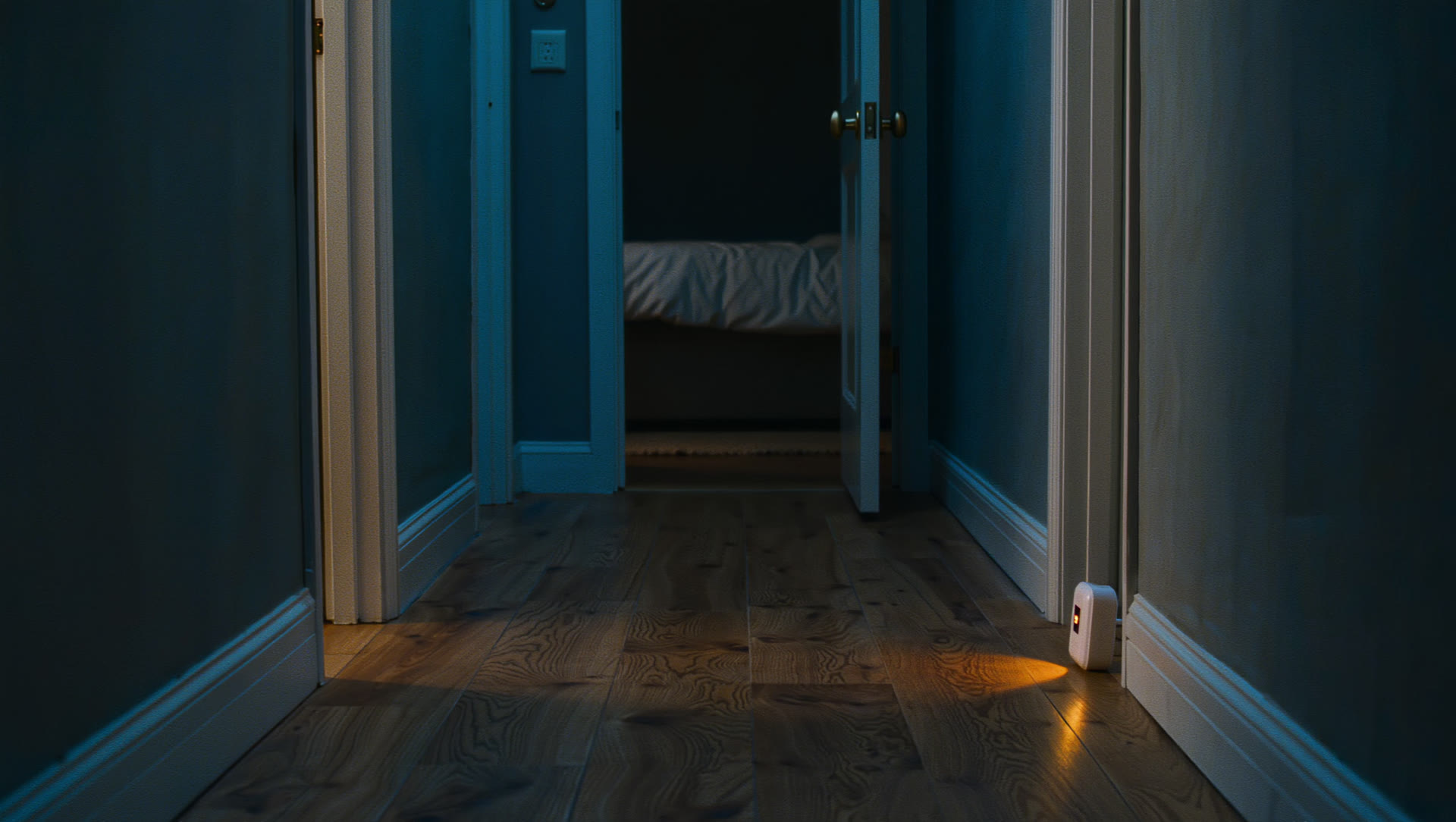
Wearables come off.
Watches, rings, and trackers only work while they are worn. People take them off to sleep, to shower, to charge, or just to get comfortable. The device ends up on the nightstand on the one night it mattered.

Small sensors in the rooms where someone you love sleeps and lives. No camera. No microphone. Nothing to wear. WhitSentry alerts when breathing motion is no longer detected or a fall is detected, and a professional monitoring center can dispatch 911.
Starter kit $299. Monitoring from $34.99 a month. Coming soon.
Whitney Allen was 22 and healthy. She went to sleep one night and did not wake up. No one knew until morning.
Her father built WhitSentry so that no one should die at home because no one was watching. It carries her name.
Whitney's story is told at whitneyallen.org.
Why WhitSentry
Every product built to protect someone at home fails in the same quiet way. It needs something from the person it protects.

Watches, rings, and trackers only work while they are worn. People take them off to sleep, to shower, to charge, or just to get comfortable. The device ends up on the nightstand on the one night it mattered.
A help button only works if the person can press it. The emergencies that matter most are the ones that take that ability away first. A button cannot help someone who is unconscious.
A camera in a bedroom is a trade most families will never accept, and they are right not to. Protection should not cost someone their privacy in the most private room of the house.
WhitSentry asks nothing of the person it protects. Nothing worn. Nothing filmed. Nothing to press.
The setup
Three steps. You can set it up in an afternoon, in your own home or your parent's.
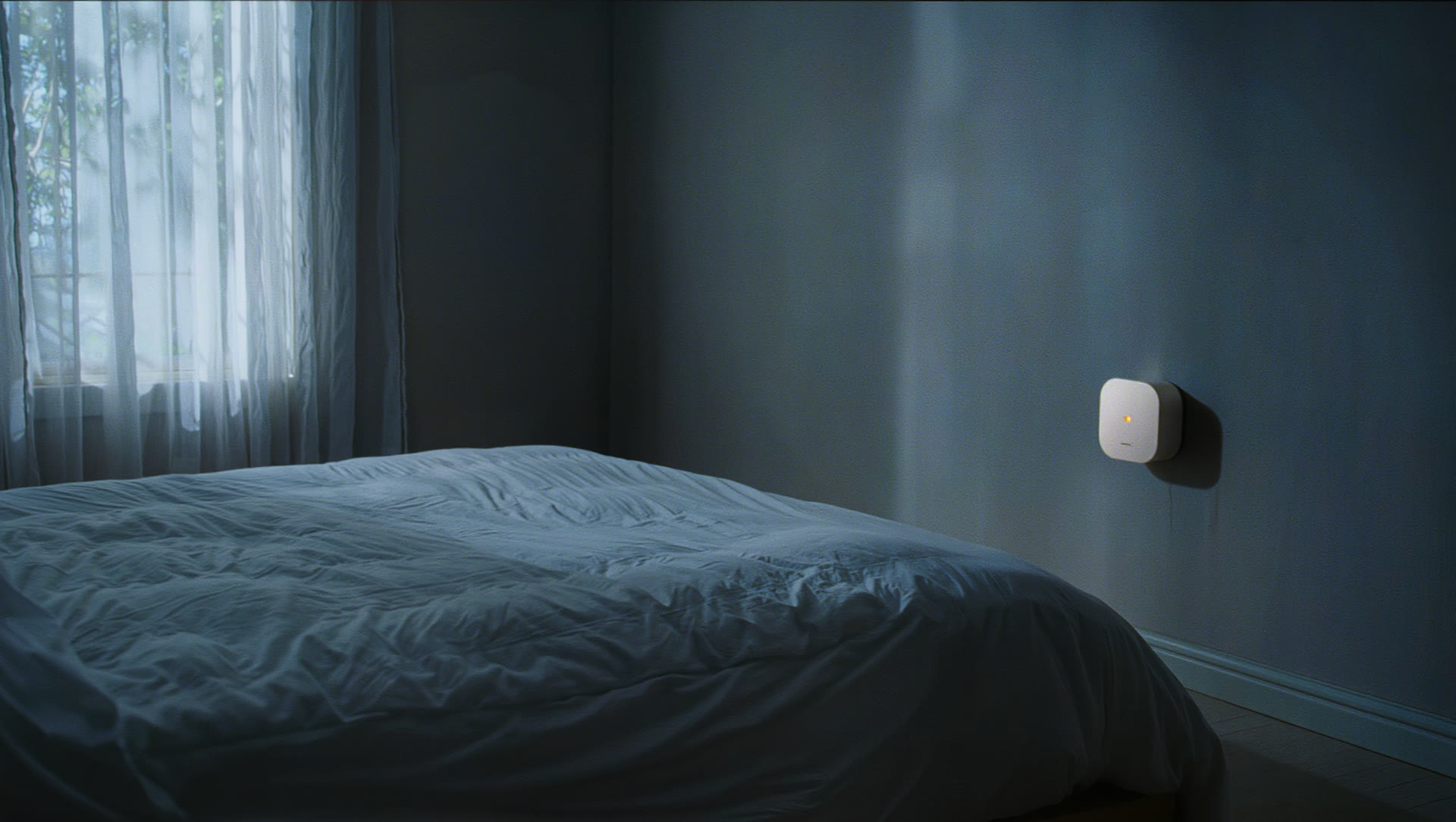
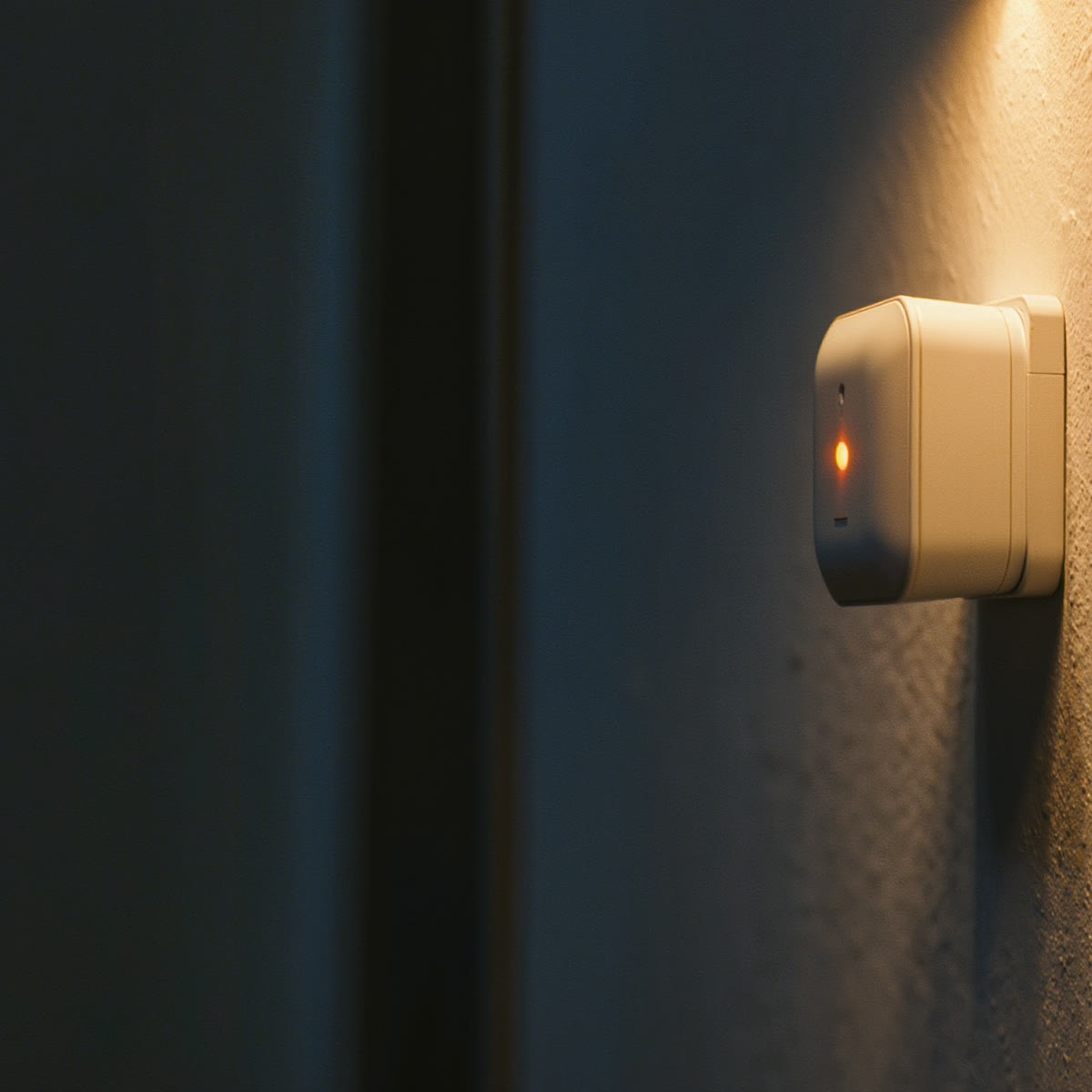
Each sensor is about the size of a credit card and plugs into a wall outlet. One per bedroom, plus the rooms where your family spends the day. The sensors use the WiFi signal already in the home to sense the small motion of a chest rising and falling. No camera, no microphone, nothing to wear.
The app walks you through calibration, room by room. First the room sits empty for about a minute. Then the person who lives there follows a few simple prompts, so the sensor learns their signal in that space. The app tells you exactly what to do the whole way through. If you rearrange the furniture later, the app prompts you to recalibrate so the system stays accurate.

From then on, WhitSentry is on duty around the clock. The hub runs on your home internet with cellular backup and its own battery, so it stays reachable if the power or WiFi goes out. If breathing motion is no longer detected or a fall is detected, WhitSentry responds in a ladder:
You choose who gets called and in what order. The monitoring center steps in only if no one on your list responds. See it for yourself in the demo.
The demo
Click through the setup, exactly as designed. This is a demo. Nothing is recorded and no alerts are real.
Step 1: Create your account. Start with your name and who you are setting this up for. Yourself, a parent, or your whole household.
Step 2: Add your devices. Plug in the hub, then each sensor. Each one shows up in the app as it comes online. Name each one for the room it lives in.
Step 3: Calibrate each room. Each sensor learns its room while the room is empty. As rooms finish, your home map fills in. Then add the people who live here.
Step 4: Your household at a glance. The whole home on one screen. A room with someone in it shows breathing motion detected. An empty room shows empty. By default that is all it shows, and all that leaves the house. Live wellness detail is a per-person choice, and it stays at home.
This takes about a minute in the real app.
Welcome, Sarah. Let's set up Ruth's home.
Next we add your devices.
Plug in the hub first. Then plug in each sensor. It shows up in the app as it comes online.
Each sensor plugs into a wall outlet in the room it watches.
No cameras. No microphones. Nothing worn.
WhitSentry learns each room while it is empty. Real calibration takes 60 seconds per room. The demo runs faster than real life.
Home map ready. You will see it on the next screen.
Calibration does not refresh itself. Move the furniture and the app asks you to redo it.
Give each person a name and their usual sleeping room. In the real app, each person also does a short guided walk-through in their room. It takes about four minutes. The demo skips it.
One sensor watches one sleeper per room. Shared bedrooms add a bedside pod.
Alerts go straight to Sarah's phone.
Today, 2:17 PM
SimulatedHub online · Cellular backup ready
Off by default. Each person turns it on for themselves. Detail shows at home, from your hub.
Statuses are simple on purpose. Only a yes or a no leaves the house. The wellness view is opt-in and stays at home.
That is the whole app. Quiet when things are fine. Loud when they are not.
Privacy
There is no camera. There is no microphone. There is no image of anyone, ever, because none is ever created.
The sensors read the WiFi signal already moving through the home to sense breathing motion. By default, WhitSentry ships in privacy mode: the biometric numbers are stripped out on the sensor chip itself, and only one simple state leaves the house: someone is breathing in this room. Nothing more granular leaves the house unless you turn it on.
We built default privacy mode this way because it is the only design a family should accept in a bedroom.
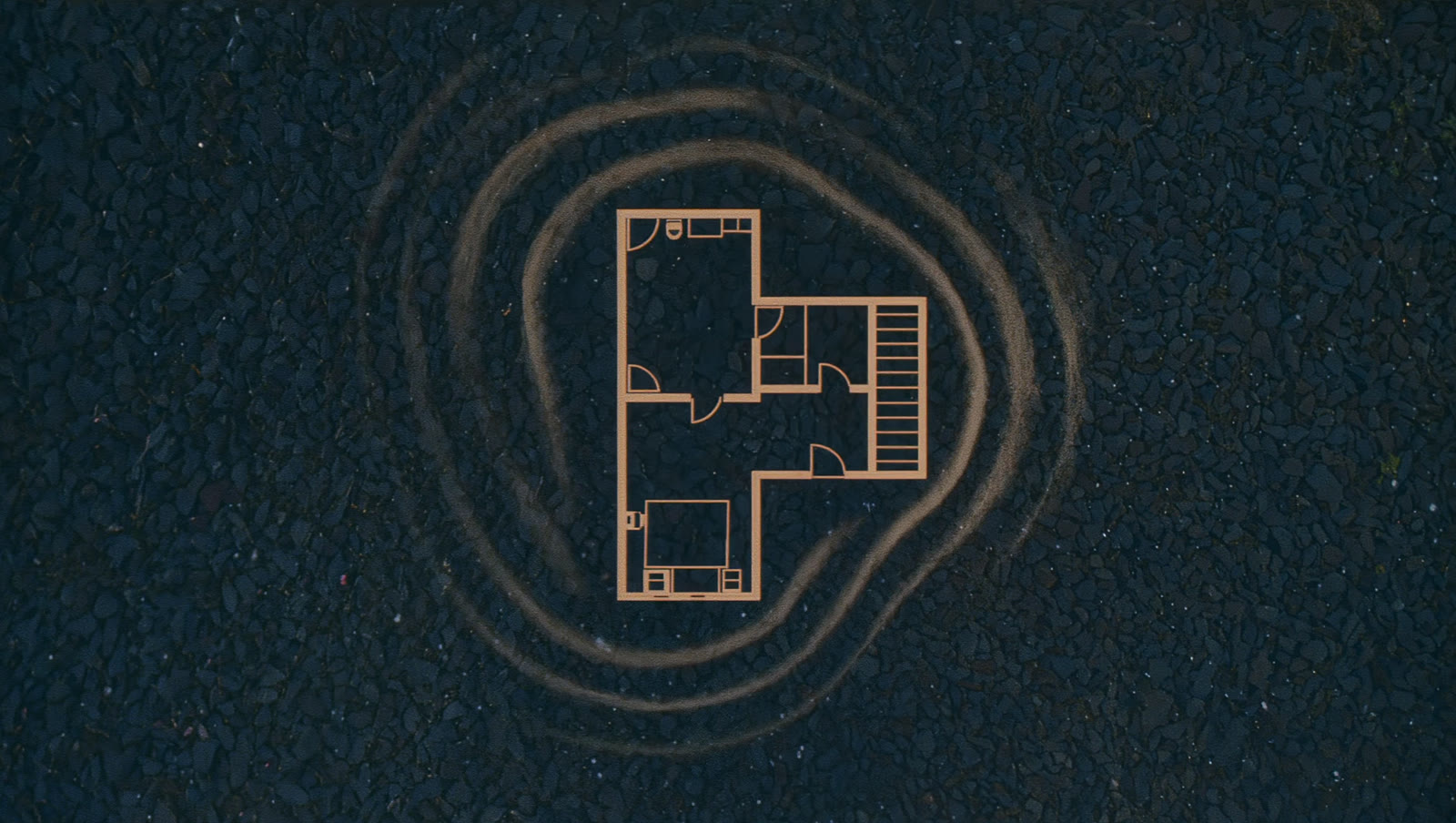
By default, the only thing that leaves the house is "someone is breathing in this room."
Honest limits
A safety product that hides its limits is not one you should trust. Here are ours, stated plainly.
A single sensor reads one person in a room. Two people in the same bed read as one. A shared bedroom needs a bedside radar pod for each sleeper. We tell you this up front, before you buy.
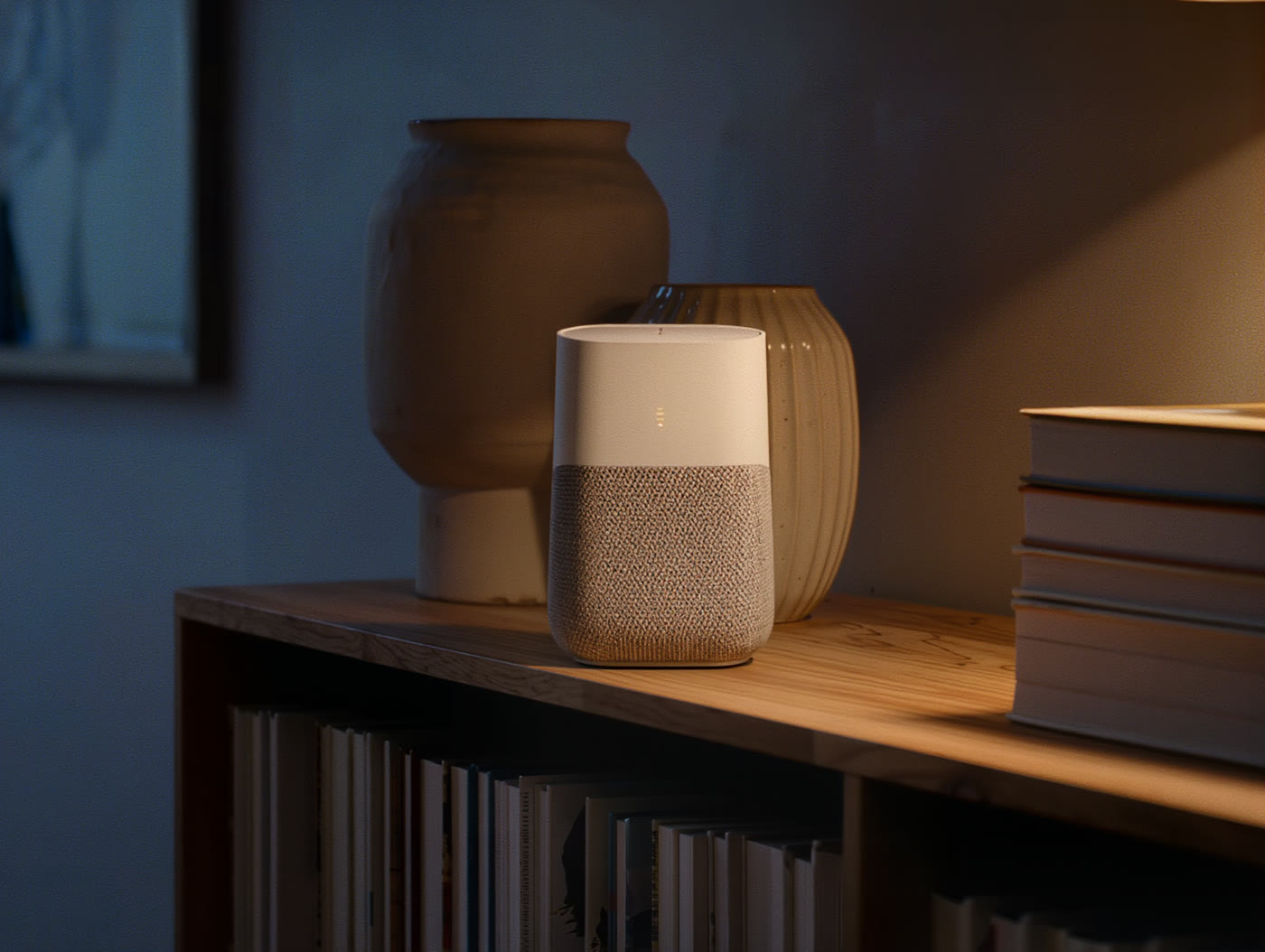
Sensor nodes plug into outlets and stop sensing the moment the power goes out. The hub has its own battery and cellular backup, so within seconds of an outage it tells you and every contact that monitoring is down. It never goes silent without telling anyone. But sensing does not resume until the power does.
Every detection threshold in WhitSentry is validated through a bench gate against explicit targets we hold ourselves to, then a live pilot in real homes, before it is allowed to trigger a real alarm. We do not ship a life-safety alert on a lab guess.
If a limit ever changes, we will say so just as plainly.
Pricing
Hardware once, monitoring monthly. Every plan includes the complete escalation ladder, including a professional monitoring center that verifies events and can dispatch 911. The core promise is never gated behind a price.
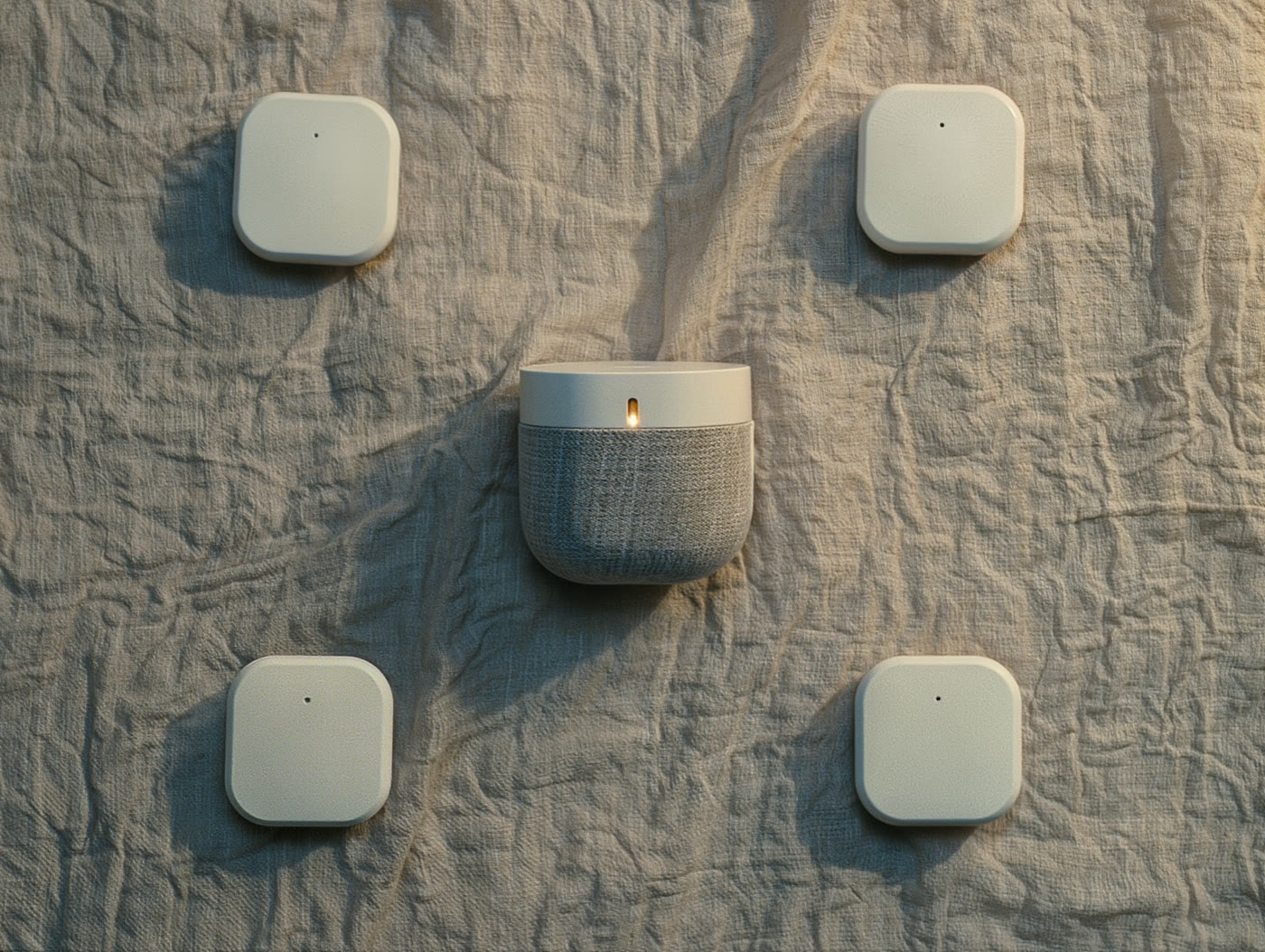
$299
One hub and four room sensors. Covers the bedrooms and one common area. This is where every home starts.
$49
One more sensor, one more covered room. Add as many as your home needs.
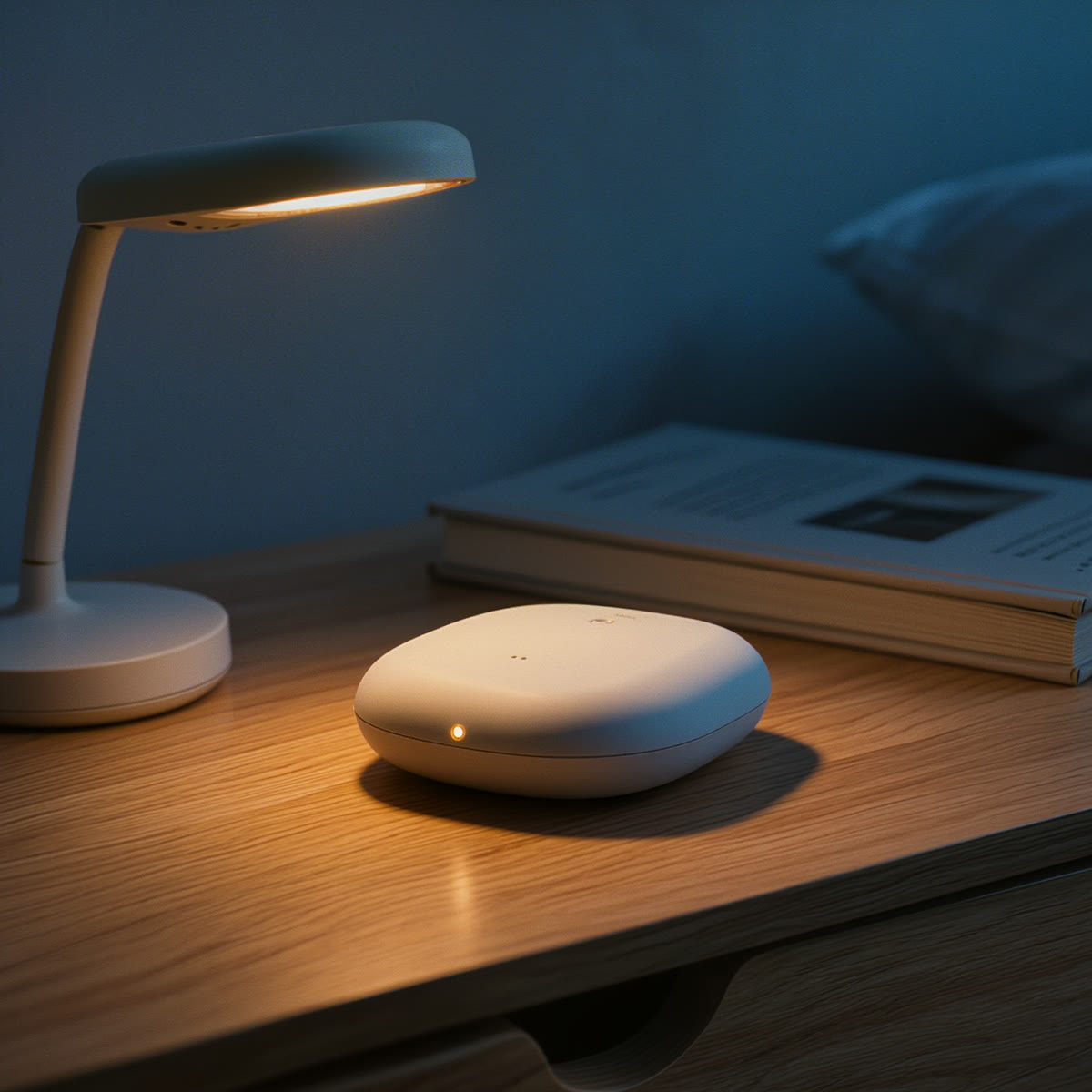
$79
For shared bedrooms. One pod per sleeper adds coverage at the bedside, where a room sensor reads two people as one.
$34.99 a month
The full escalation ladder: local alarm with cancel window, your contact cascade, and verify-and-dispatch from a professional monitoring center. Plus the app and hub heartbeat monitoring, so you know monitoring is up.
$59.99 a month
Everything in Standard, plus priority operator routing, a faster dispatch protocol window, and extended event-record retention.

Verify-and-dispatch is included in both tiers.
FAQ

No. WhitSentry is not a medical device. It does not diagnose, treat, cure, or prevent any disease or medical condition. It alerts when breathing motion is no longer detected or a fall is detected. It is a home safety product, in the same spirit as a smoke detector: it alerts on a physical signal so people can respond. It is not a substitute for calling 911 directly when you or someone present is able to call.
Two things. It alerts when breathing motion is no longer detected for a person present in a covered room, and it alerts when a fall is detected. That is the whole claim, and we keep it that narrow on purpose.
No. There is no camera and no microphone in any WhitSentry device. The sensors read the WiFi signal already in the home to sense breathing motion. No image or audio of anyone ever exists.
First, a voice alarm in the house and a push alert to your phone, with a 60-second window to cancel if everything is fine. If no one cancels, WhitSentry calls, texts, and emails the contacts you chose, in your order. If no one responds, a professional monitoring center verifies the event and can dispatch 911.
The 60-second cancel window exists for exactly this. Rolled over in an odd position, sensor got confused, all fine: cancel with one tap from your phone. And a trained human at the monitoring center verifies every event before 911 is ever dispatched. No one sends an ambulance on a sensor reading alone.
The hub does. It has a battery and cellular backup, so if the power or WiFi goes out, it alerts you and your contacts within seconds that monitoring is down. The room sensors plug into wall outlets, so sensing itself pauses until power returns. We would rather tell you that plainly than let the system go quiet without a word.
Yes, with one addition. A room sensor reads one sleeper per room, so a shared bedroom needs a bedside radar pod for each sleeper. The pod is $79.
No app for them, no wearable, and nothing to press. There is a one-time guided setup you do together in their home, room by room. After that, you manage everything from your own phone. Day to day, WhitSentry asks nothing of the person it protects. It is just their home.
Almost no one, because by default almost none exists. WhitSentry ships in privacy mode: biometric numbers are stripped on the sensor chip itself, and the only state that leaves the house is "someone is breathing in this room." Nothing more granular leaves the house unless you turn it on. You see household status in the app. The monitoring center sees an event only when the ladder reaches them.
Soon. WhitSentry is finishing validation and certification before launch, because a life-safety product has to earn its alarms before it ships. Join the waitlist and you will be first in line when it launches.

WhitSentry launches soon. Join the waitlist now and you are first in line when the starter kit ships.
WhitSentry is not on sale yet. We are finishing validation and certification first, because a life-safety product has to earn its alarms. Leave your details and you are first in line when it launches.
You're on the list. We will email you the moment WhitSentry is available, and you will hear it from us first. Thank you for trusting us with someone you love.
Something went wrong sending that. Please try again, or email hello@whitsentry.com.